

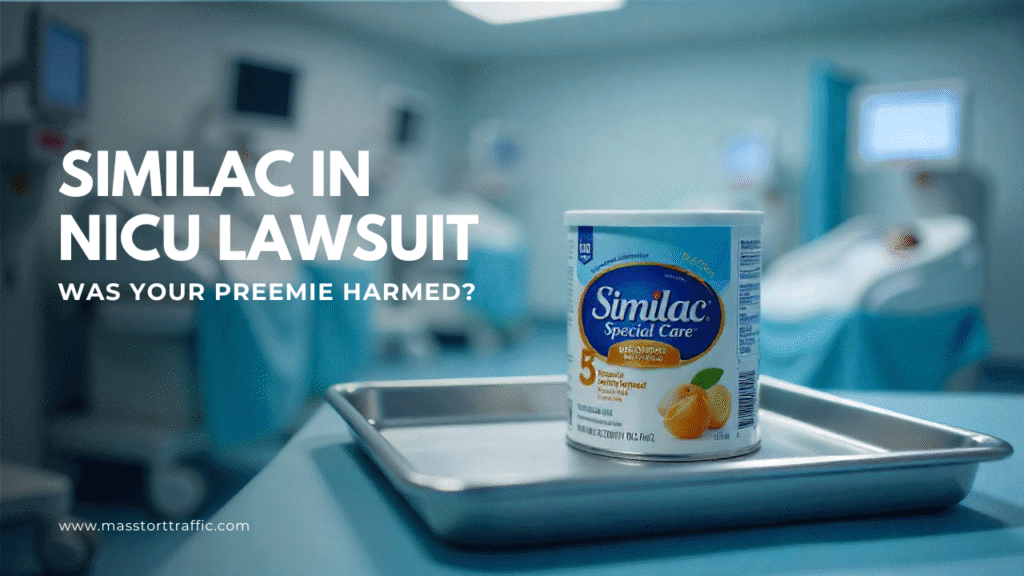
Having a premature baby in the Neonatal Intensive Care Unit (NICU) is an emotional rollercoaster. You place your complete trust in the medical team and the products they use. Learning that a trusted formula brand may have caused your child catastrophic harm is a devastating blow. This guide explains the Similac in NICU lawsuit and your family’s rights.
Key Takeaways: The NEC Baby Formula Lawsuit
- ◆ The Scientific Link: Decades of research show that cow’s milk-based baby formulas, such as Similac® and Enfamil®, significantly increase the risk of necrotizing enterocolitis (NEC) in premature infants. NEC is a severe and often fatal intestinal disease that causes inflammation and death of intestinal tissue.
- ◆ The Legal Claim: Hundreds of families are filing lawsuits against manufacturers Abbott Laboratories and Mead Johnson. The core legal argument is “failure to warn” — that the companies knew their products posed a deadly risk to preemies but deliberately chose not to add a warning label for parents and doctors.
- ◆ Your Family’s Rights: If your premature infant was fed a cow’s milk-based formula in the hospital and was later diagnosed with NEC, your family may be eligible to seek significant compensation for medical bills, pain and suffering, and more. Our team is actively investigating these claims to help families get the justice they deserve.
Ready to Fight for Your Compensation?
Your Free, Confidential, No-Obligation Case Evaluation is Waiting!
GET YOUR FREE CASE EVALUATION NOW →Prefer to call? Call (+1) 210-940-9440 Today
Table of Contents
What Is Necrotizing Enterocolitis (NEC)?
Necrotizing enterocolitis (NEC) is a severe and often sudden intestinal disease that is a leading cause of death for premature infants in the NICU. The condition causes severe inflammation that can destroy the fragile tissue of a preemie’s underdeveloped intestine.
As the tissue dies, a hole (perforation) can form in the intestinal wall. This is a life-threatening emergency that allows bacteria to leak into the abdomen or bloodstream, causing overwhelming infections like sepsis. The mortality rate for infants with NEC can be as high as 40%, and even higher for those who require surgery.
The Link Between Similac and NEC in Premature Babies
For decades, Similac, made by Abbott Laboratories, has been a staple in NICUs across the country, marketed as a safe and necessary source of nutrition for premature infants. However, a growing body of scientific evidence and hundreds of lawsuits tell a different story.
The core of the Similac in NICU lawsuit is the link between cow’s milk-based formulas and an increased risk of NEC. This connection is not new. A landmark 1990 study published in The Lancet found that premature infants fed formula were 6 to 10 times more likely to develop NEC than those fed an exclusive human milk diet.
Human breast milk contains protective antibodies, growth factors, and immune cells that are perfectly suited to help a preemie’s gut mature and fight off infection. The proteins in cow’s milk, on the other hand, are believed to trigger the inflammatory response that leads to NEC in a fragile, underdeveloped intestine.
DID YOU KNOW?
The “Failure to Warn” Allegation
Lawsuits against Abbott Laboratories are centered on a powerful legal claim: “failure to warn”. Families allege that Abbott knew for decades about the scientific evidence linking their cow’s milk-based products to a higher risk of NEC, yet they deliberately chose not to put a warning on their packaging or marketing materials.
Plaintiffs argue that Abbott engaged in aggressive marketing tactics, promoting Similac to hospitals and NICUs as a safe and medically endorsed option for preemies. This alleged failure to disclose the known risks deprived parents and doctors of the ability to make a truly informed decision about their child’s nutrition, a decision that could have prevented a life-altering or fatal illness.
A product designed to nourish the most fragile infants should not carry a hidden, life-threatening risk. When a company fails to warn, it fails to protect.
Which Similac Products Are Named in the Lawsuits?
The litigation targets specific cow’s milk-based Similac products that are frequently given to premature and low-birth-weight infants in the NICU. It’s important to note that this includes not just formulas but also “human milk fortifiers,” which are bovine-based powders added to breast milk to increase calories but may introduce the same risks.
Products commonly named in the Similac in NICU lawsuit include:
- Similac Special Care (in 20, 24, and 30 calorie varieties)
- Similac Special Care High Protein
- Similac Human Milk Fortifier
- Similac NeoSure
- Similac Alimentum
- Similac EleCare
If you are unsure which product your baby was given, an experienced lawyer can help you obtain and review your child’s medical and feeding records to identify the specific formulas used.
The Devastating Impact and the Fight for Justice
For infants who survive NEC, the consequences can be lifelong and catastrophic. Many require emergency surgery to remove the dead portions of their intestine, which can lead to:
- Short Bowel Syndrome: A condition where the remaining intestine cannot absorb enough nutrients, often requiring lifelong intravenous nutrition.
- Intestinal Strictures: Scarring that narrows the intestine and causes blockages, often requiring more surgeries.
- Neurodevelopmental Delays: The severe infection and inflammation can affect brain development, leading to conditions like cerebral palsy or cognitive impairment.
To manage the hundreds of cases filed nationwide, the federal lawsuits have been consolidated into a Multidistrict Litigation (MDL) in Illinois. This process is already yielding major victories for families. In recent state court trials, juries have returned massive verdicts against formula manufacturers, including a $495 million verdict against Abbott Laboratories in July 2024. These outcomes send a clear message that companies can and will be held accountable.
Ready to Take the First Step Toward Justice?
Speak with our trusted legal team today. Your Free, Confidential, No-Obligation Case Evaluation is waiting — and it only takes a minute to begin.
GET YOUR FREE CASE EVALUATION NOW →Prefer to talk now? Call (+1) 210-940-9440 Today
 100% Secure & Confidential
|
100% Secure & Confidential
|
 No Obligation Consultation
By submitting this form, you agree to be contacted by a trusted legal partner for a free case review. This does not create an attorney-client relationship. Confidential and secure.
No amount of money can erase the trauma your family has endured. However, taking legal action can provide the critical resources needed for your child’s future care and deliver the justice your family deserves.
“Justice for your child has a deadline. In NEC lawsuits, delay equals denial. Act now.”
— Visit MassTortTraffic.com or Call (+1) 210-940-9440
EXTERNAL SOURCES
- National Institute of Child Health and Human Development (NIH) – Necrotizing Enterocolitis (NEC): https://www.nichd.nih.gov/health/topics/nec
- American Academy of Pediatrics – Necrotizing Enterocolitis (NEC) Overview: https://www.aap.org/en/patient-care/necrotizing-enterocolitis-nec/
- U.S. Surgeon General – The Surgeon General’s Call to Action to Support Breastfeeding (mentions NEC risk):(https://www.ncbi.nlm.nih.gov/books/NBK513357/)
Frequently Asked Questions About the NEC Baby Formula Lawsuit
Section 1: The Basics of NEC and the Lawsuit
The lawsuits allege that manufacturers of cow’s milk-based formulas, specifically Abbott Laboratories (maker of Similac®) and Mead Johnson (maker of Enfamil®), knew for decades that their products significantly increased the risk of necrotizing enterocolitis (NEC) in premature infants but failed to warn parents and doctors.
Necrotizing enterocolitis (NEC) is a serious and often life-threatening intestinal disease that primarily affects premature and low-birth-weight infants. It causes severe inflammation that can destroy intestinal tissue, leading to a hole (perforation) in the gut, which can cause overwhelming infections like sepsis.
The lawsuits primarily name cow’s milk-based products from Similac and Enfamil that are designed for premature infants. These include specialized formulas and “human milk fortifiers” (which are also bovine-based) such as Similac Special Care, Similac NeoSure, Enfamil NeuroPro EnfaCare, and Enfamil Human Milk Fortifier.
A premature baby’s digestive system is underdeveloped and can’t easily digest the proteins in cow’s milk. This is believed to trigger an inflammatory response that damages the fragile intestinal lining, leading to NEC. Human breast milk contains protective antibodies and immune cells that help a preemie’s gut mature and fight infection.
No. As of late 2025, there has not been a recall of these formulas specifically for the risk of NEC. The lawsuits are based on the manufacturers’ “failure to warn” about the known risks, not a specific contamination or manufacturing defect that would typically trigger a recall.
Symptoms can appear suddenly and include a swollen, hard, or discolored (red or blue) abdomen, bloody stools, green or yellow vomit, difficulty feeding, lethargy (sluggishness), and changes in heart rate, breathing, or body temperature.
Section 2: Eligibility and Filing a Claim
You may be eligible to file a lawsuit if your child was born prematurely or with a low birth weight, was fed a cow’s milk-based formula (like Similac or Enfamil), and was subsequently diagnosed with necrotizing enterocolitis.
Not necessarily. Most states have a “discovery rule,” which means the time limit (statute of limitations) may not start until you discovered the link between the formula and your child’s NEC, which for many parents was only recently. It is crucial to speak with a lawyer immediately to understand the deadline in your state.
The deadline, or statute of limitations, varies by state but is typically two to three years. However, the “discovery rule” and special exceptions for injuries to minors can extend this deadline, so you should not assume it’s too late.
Yes. If you tragically lost your child to NEC, your family may be able to file a wrongful death lawsuit. This type of claim seeks compensation for medical and funeral expenses, as well as for your family’s emotional distress and suffering.
This is very common, and you can still have a case. An experienced NEC lawyer can obtain and review your child’s hospital medical and feeding records to identify the exact products that were used.
It is less common, but you may still have a case. While the vast majority of NEC cases affect premature infants, full-term babies with other health issues can also develop NEC. It is best to consult an attorney to evaluate your specific situation.
Section 3: The Legal Process
The first step is to get a free case review from a law firm that specializes in these cases. They will listen to your story, review the basic facts, and determine if you may be eligible to file a claim. There is no cost or obligation for this consultation.
Ready to Fight for Your Compensation?
Your Free, Confidential, No-Obligation Case Evaluation is Waiting!
GET YOUR FREE CASE EVALUATION NOW →Prefer to call? Call (+1) 210-940-9440 Today.
There are no upfront costs. Reputable law firms handle these cases on a contingency-fee basis, which means they only get paid if they successfully recover compensation for you through a settlement or verdict.
No, it is a mass tort, which is handled through a Multidistrict Litigation (MDL). In a mass tort, each family’s case remains individual, and compensation is based on the specific harm your child suffered. This is different from a class action, where all plaintiffs typically receive the same settlement amount.
MDL stands for Multidistrict Litigation. The NEC MDL (MDL 3026) is a process that consolidates all federal lawsuits into a single court in Illinois to streamline pretrial proceedings like evidence gathering. This makes the process more efficient for everyone involved.
Bellwether trials are “test cases” selected from the larger group of lawsuits in the MDL to be tried first. The outcomes of these trials help both sides understand how juries might respond to the evidence and often guide negotiations for a global settlement for the remaining cases.
These cases can take several months to a few years to resolve. The timeline depends on the complexity of the case and the progress of the larger MDL, including the results of the bellwether trials.
Section 4: Compensation and Settlements
As of late 2025, there has not been a global settlement for all the cases in the federal MDL. However, individual state court trials have resulted in massive verdicts for families, including a $60 million verdict against Enfamil’s maker and a $495 million verdict against Similac’s maker.
The value of each case is unique and depends on the severity of the injury. Legal experts estimate that potential payouts could range from $50,000 for cases with a full recovery to over $500,000 or even millions for cases involving wrongful death or severe, lifelong disabilities like short bowel syndrome.
Compensation can cover both economic and non-economic losses. This includes medical expenses (past and future), lost wages for parents, pain and suffering for both the child and family, and in tragic cases, wrongful death damages like funeral costs.
Section 5: Medical Questions
Survivors of severe NEC can face lifelong challenges, including short bowel syndrome, intestinal scarring (strictures), growth failure, and neurodevelopmental delays like cerebral palsy.
Short bowel syndrome (SBS) is a serious condition that can occur after surgery for NEC, where a large portion of the intestine is removed. The remaining bowel is too short to absorb enough nutrients and fluids, often requiring lifelong intravenous nutrition (PN).
Doctors diagnose NEC based on symptoms like a swollen belly and bloody stools, combined with an abdominal X-ray. The X-ray may show a bubbly appearance in the intestinal wall (pneumatosis intestinalis) or air that has leaked into the abdomen, which are key signs of the disease.
Colic is a pattern of intense crying in an otherwise healthy baby, while reflux is simple spitting up. NEC is a medical emergency with severe, systemic symptoms like a hard, discolored belly, bloody stools, and green vomit. A baby with NEC is visibly and seriously ill, which is very different from a “happy spitter” or a colicky but healthy infant.
Section 6: Legal Strategy and Evidence
The most important evidence is your child’s medical records. These records should show that your baby was born prematurely, was fed a cow’s milk-based formula, and was diagnosed with NEC. Your lawyer will help you gather all necessary documentation.
Under HIPAA, you have a legal right to your child’s medical records. You can request them by contacting the hospital’s Medical Records or Health Information Management (HIM) department and filling out an “Authorization to Release Health Information” form. Your lawyer can also handle this entire process for you.
The primary defense strategy for Abbott and Mead Johnson is to deny that their formulas cause NEC. They argue that NEC is a multifactorial disease of prematurity and that there is no “conclusive” scientific proof of causation.
Bellwether trials are “test cases” selected from the larger group of lawsuits in the MDL to be tried first. The outcomes of these trials help both sides understand how juries might respond to the evidence and often guide negotiations for a global settlement for the remaining cases.
No. Because the NEC lawsuits are a national mass tort, with many cases consolidated in a federal MDL, you can hire the best and most experienced law firm in the country, regardless of where you live. They can file a claim for you in the appropriate court.