Rideshare Assault Lawyer: Get Justice for Your Trauma Today
masstorttraffic
April 21, 2026
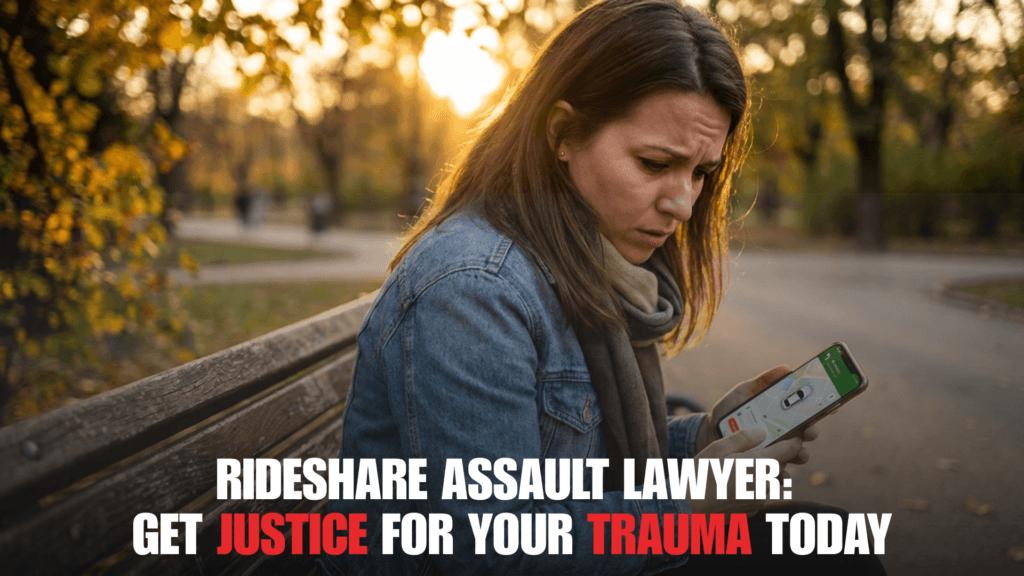
Getting into an Uber or Lyft should never end in fear, pain, or violation. Yet for a growing number of passengers and drivers, a simple ride home turns into a life altering trauma. If you or someone you love experienced sexual assault or physical attack during a rideshare trip, you need more than just support. You need a dedicated rideshare assault lawyer who understands the unique legal landscape of these devastating cases. The companies behind these apps have teams of lawyers protecting their bottom line. You deserve someone in your corner fighting exclusively for your safety, your privacy, and your future.
Key Takeaways: The Rideshare Sexual Assault Lawsuit
◆The Legal Claim: Failure to Protect. Hundreds of lawsuits are being filed against rideshare companies like Uber and Lyft. The core legal argument is that these companies demonstrated corporate negligence by failing to protect their passengers. Lawsuits allege the companies knew for years that their platforms were being used by predators but failed to implement adequate safety measures, such as conducting proper driver background checks, responding to passenger complaints, and removing dangerous drivers from the platform.
◆The Scale of the Crisis: This is not an issue of a few isolated incidents. Unsealed court documents reveal Uber received 400,181 reports of sexual assault or misconduct between 2017 and 2021. As of October 2025, more than 2,700 survivors have filed lawsuits against Uber alone, alleging everything from harassment and groping to kidnapping and rape.
◆Your Family’s Rights: If you or a loved one used a rideshare app and were sexually assaulted or injured by the driver, you may be eligible to file a lawsuit. A successful claim can help secure significant compensation for medical bills, therapy costs, pain and suffering, lost income, and more. Our team is actively investigating these claims to help survivors get the justice they deserve.
◆Most Recent Updates (October 2025):
Federal Lawsuits Consolidated: Thousands of federal lawsuits filed by survivors against Uber have been consolidated into a Multidistrict Litigation (MDL No. 3084) in the Northern District of California to streamline the legal process.
First Federal Trial Nears: The litigation is moving forward, with the first federal “bellwether” (test) trial in the Uber MDL scheduled to begin on December 8, 2025. The outcomes of these early trials will heavily influence potential settlement negotiations for the thousands of other pending cases.
State Court Verdict & Government Scrutiny: In the first state-level trial, a California jury in October 2025 found Uber negligent in its safety practices but not liable for damages in that specific case. Meanwhile, the crisis has drawn government attention, with a U.S. House subcommittee launching an inquiry into Uber’s safety data and the New Jersey Attorney General opening a separate investigation.
Lyft Lawsuits Gaining Momentum: A motion was filed in October 2025 to consolidate the growing number of sexual assault lawsuits against Lyft into their own MDL, with the petition noting that “hundreds or thousands” of additional cases could be filed.
◆Our Firm is Taking Cases: Our law firm is providing free and confidential consultations to survivors of rideshare sexual assault. We are actively helping victims file claims to hold these companies accountable.
Ready to Fight for Your Compensation?
Your Free, Confidential, No-Obligation Case Evaluation is Waiting!
When an assault happens in a private home or a bar, the path to justice is generally clear. You pursue criminal charges against the perpetrator and potentially a civil claim against them or the property owner. But when the attack happens inside a vehicle operated by a multibillion dollar technology company, the legal waters become murky.
Uber and Lyft classify their drivers as independent contractors, not employees. This classification is the cornerstone of their defense strategy. They often argue they are merely a technology platform connecting riders with drivers and therefore bear no responsibility for criminal acts committed by those drivers. A skilled rideshare assault lawyer knows how to navigate these corporate shields and identify the specific avenues of liability that do apply.
Who Can Be Held Liable in a Rideshare Assault Claim
Your case is not just against the individual who harmed you. In many situations, the rideshare company itself may bear legal responsibility for your injuries. Determining liability requires a thorough investigation into the company’s safety practices and the driver’s history.
Potential liable parties may include:
The Assailant: Whether a driver or a fellow passenger, the individual who committed the assault is criminally and civilly liable.
Uber or Lyft: The company can be held liable for negligent hiring, negligent retention, or negligent supervision. This applies if they failed to perform adequate background checks or ignored prior complaints about a driver’s behavior.
Third-Party Security Contractors: In some cases, the companies outsource background checks. If that vendor missed a red flag in a criminal history, they may share liability.
Understanding the Different Types of Rideshare Assault
The term “assault” covers a wide range of harmful and illegal conduct. A rideshare assault lawyer handles cases involving more than just the most violent physical attacks. The trauma inflicted by unwanted touching or forced confinement is just as real and deserving of legal remedy.
Common scenarios that lead to legal claims include:
Sexual assault and rape of a passenger by a driver
Sexual assault of a driver by a passenger
Physical assault and battery resulting in broken bones or head trauma
Kidnapping or false imprisonment (refusing to let a passenger exit the vehicle)
Stalking or harassment following a rideshare trip
The Role of Background Checks and Safety Features
Many victims wonder, “How did this person get approved to drive?” The answer often lies in the gaps within the rideshare companies’ screening processes. While Uber and Lyft advertise annual background checks, these checks are not foolproof. They rely on commercial databases that may not capture recent arrests or out of state convictions.
Furthermore, a clean criminal record does not guarantee a safe ride. A rideshare assault lawyer will investigate whether there were prior “soft complaints” made through the app. Did other riders report the driver for making them uncomfortable? Did the company fail to act on those warnings? Failing to deactivate a driver with a pattern of predatory behavior is a clear failure in duty of care.
What Compensation Can You Pursue?
The aftermath of an assault impacts every area of your life. The legal system allows you to seek financial recovery for both the economic and emotional harm you have suffered. This is not about putting a price on pain. It is about holding the responsible parties accountable and securing the resources you need to heal.
In a rideshare assault lawsuit, damages often include:
Costs of medical care and psychological counseling
Lost wages from time missed at work
Pain and suffering
Emotional distress and post traumatic stress disorder (PTSD)
Loss of enjoyment of life
Punitive damages designed to punish the company for reckless disregard of safety
Rideshare Lawsuit Facts | Did You Know?
DID YOU KNOW?
Many survivors worry that coming forward will expose them to public scrutiny. A qualified legal team can help protect your identity and keep sensitive details sealed from public view while still pursuing maximum compensation.
Ready to Take the First Step Toward Justice?
Speak with our trusted legal team today. Your Free, Confidential, No-Obligation Case Evaluation is waiting — and it only takes a minute to begin.
By submitting this form, you agree to be contacted by a trusted legal partner for a free case review. This does not create an attorney-client relationship. Confidential and secure.
You are not alone, and what happened to you is not your fault. If you were assaulted during an Uber or Lyft ride, you deserve a legal team that treats your trauma with compassion and fights aggressively for the justice you are owed.
What to Do Immediately After a Rideshare Assault
The moments and days following an assault are disorienting and terrifying. Your safety is the absolute priority. Once you are in a secure location, there are steps you can take that will protect your health and preserve your legal rights.
Critical Steps to Preserve Evidence
In the digital age, evidence in rideshare cases is unique and can disappear quickly if not preserved. Unlike a slip and fall in a store, the entire incident is tracked by GPS and app data. Here is a checklist of what to do as soon as it is safe:
Seek Medical Attention: A Sexual Assault Forensic Exam (SAFE kit) is vital for your health and for preserving DNA evidence. Even if you are unsure about reporting, this documentation is crucial.
Screenshot Everything: Take screenshots of the ride receipt showing the driver’s name, photo, license plate, and route. This information may become inaccessible in the app later.
Do Not Delete Communications: Save any text messages or in app messages you sent to friends or family about the ride or the driver’s behavior.
Write Down Your Memory: As soon as you are able, write down every detail you remember. Trauma affects memory, and having a written record helps maintain consistency in your account.
How a Rideshare Assault Lawyer Navigates Insurance and Arbitration
Most people assume you file a claim with the driver’s car insurance. However, the driver’s personal auto policy almost always excludes coverage for “livery” or commercial activity. This means when the driver was logged into the app, their personal insurance is not active.
Instead, Uber and Lyft carry substantial commercial liability policies (often $1 million or more) that cover incidents during a ride. However, accessing this coverage is not straightforward. The companies frequently require victims to agree to private arbitration rather than a public jury trial. A rideshare assault lawyer understands how to challenge forced arbitration clauses and, when necessary, navigate the arbitration process to secure a fair outcome.
Finding the Right Legal Advocate for Your Recovery
Choosing an attorney is one of the most important decisions you will make during this process. You need a firm that understands not just personal injury law, but the specific regulations governing Transportation Network Companies (TNCs). You also need an advocate who approaches your case with the empathy and privacy it deserves.
When speaking with a potential legal representative, consider these factors:
Experience with TNC Litigation: Have they handled cases against Uber or Lyft specifically?
Compassion for Survivors: Do they treat you with dignity and patience, or do you feel like just another case number?
Resources for Investigation: Can they hire digital forensics experts to retrieve lost app data if needed?
The journey toward justice after an assault is deeply personal and often difficult. But holding these billion dollar companies accountable is a powerful step in reclaiming your agency. You deserve to feel safe in the world, and you deserve a legal system that protects you when that safety is stolen.
“Rideshare assault survivors have limited time to seek justice. In Uber & Lyft lawsuits, delay equals denial. Protect your rights today.”
⚖️ Over 10,000+ claims filed • MDL consolidation underway • No upfront fees
Learn about rideshare safety data from the Uber Safety Report: Uber US Safety Report
Find support and resources for survivors at the Rape, Abuse & Incest National Network (RAINN): Sexual Assault Resources
Understand the legal framework of rideshare companies at the National Conference of State Legislatures: Transportation Network Companies
Frequently Asked Questions About the Uber / Lyft Sexual Abuse Lawsuit
Part I: Understanding the Lawsuit & the Scope of the Problem
These are civil lawsuits filed by passengers who were sexually assaulted, harassed, or attacked by their Uber or Lyft drivers. The core allegation is that the rideshare companies are legally responsible for these attacks due to corporate negligence, including their failure to implement adequate safety measures to protect riders.
The numbers are staggering. According to court documents, Uber received 400,181 reports of sexual assault or misconduct between 2017 and 2021. Lyft has also acknowledged thousands of incidents, with one legal filing noting the company identified over 18,000 instances of assault and harassment in a single year. As of October 2025, more than 2,700 survivors have filed lawsuits against Uber alone.
The lawsuits claim that Uber and Lyft acted recklessly with passenger safety by failing to:
Adequately screen drivers: Lawsuits allege the companies chose not to use more rigorous, fingerprint-based background checks, which are standard in the taxi industry.
Respond to passenger complaints: The companies are accused of ignoring credible complaints and allowing dangerous drivers to remain on their platforms.
Implement necessary safety features: Survivors argue that the companies resisted or delayed implementing safety measures like in-car cameras or better in-app emergency assistance.
The legal definition is broad and covers a wide range of non-consensual acts. This includes, but is not limited to:
Rape or attempted rape
Groping, fondling, or unwanted sexual touching
Forced sexual acts or sodomy
Indecent exposure
Kidnapping or physical detainment
Unwanted kissing
If you are unsure whether an incident qualifies, it is best to speak with an attorney. It costs nothing to discuss your case.
The lawsuits are based on the legal theory of corporate negligence. This means the case isn’t just about the driver’s crime, but about the company’s own failures. The argument is that Uber and Lyft knew for years that assaults were happening on their platforms but prioritized growth over passenger safety, making them directly responsible for creating an unsafe environment.
Uber and Lyft primarily argue that they are not responsible because their drivers are independent contractors, not employees. Generally, a company is not liable for the actions of an independent contractor. They also argue that a sexual assault is an independent criminal act that falls outside the driver’s scope of work. However, attorneys for the survivors counter these arguments by focusing on the companies’ direct negligence in hiring, supervising, and retaining those drivers.
Part II: The Legal Process Explained
No, it is not a class-action lawsuit. The federal cases against Uber have been consolidated into a Multidistrict Litigation (MDL). An MDL groups similar cases before one judge for pre-trial proceedings to make the process more efficient. However, unlike a class action, each person’s lawsuit remains individual, and any potential settlement is based on the specific facts of their case.
Uber: The Uber MDL (MDL No. 3084) is in an active pre-trial phase, with over 2,700 cases pending. The first federal “bellwether” (test) trials are scheduled to begin in December 2025.
Lyft: While not yet an MDL, a motion was filed in October 2025 to consolidate the growing number of federal lawsuits against Lyft. Over 100 cases are already grouped in California state court.
You may be eligible to file a rideshare assault lawsuit if you or your child:
Used a rideshare app like Uber or Lyft.
Were sexually assaulted or physically injured by the driver during or after the ride.
Ready to Fight for Your Compensation?
Your Free, Confidential, No-Obligation Case Evaluation is Waiting!
Your first priority is your child’s safety and well-being.
Get to a Safe Place: Ensure your child is in a secure environment.
Seek Medical Attention: Go to a hospital or clinic immediately, even if there are no visible injuries. This creates a crucial medical record.
Report to the Police: Filing a police report creates an official record of the incident.
Preserve Evidence: Take screenshots of the ride receipt, driver information, and route from the app.
Document Everything: Write down all details of the incident while they are fresh.
Contact an Attorney: Speak with a lawyer experienced in sexual assault cases to understand your legal options.
A strong case is built on documentation. Key evidence includes:
Digital Ride Information: The app receipt showing the date, time, driver, and route.
Medical Records: Documents from any medical examinations or therapy sessions.
Police Reports: The official report filed with law enforcement.
Witness Information: Contact information for anyone your child spoke to immediately after the incident.
Communications: Any complaints made to the rideshare company and their responses.
The deadline, known as the statute of limitations, varies by state. For cases involving minors, the clock is typically “tolled” (paused) until the child turns 18. Many states have passed laws that give survivors of childhood abuse decades to file a claim, sometimes until they are 30, 40, or even 50 years old. It is critical to consult an attorney to determine the specific deadline for your case.
No. A criminal case and a civil lawsuit are separate. You can file a civil lawsuit to seek financial compensation from the company even if the driver was never arrested, charged, or convicted of a crime. The burden of proof is lower in a civil case than in a criminal one.
While possible, it is unlikely. The vast majority of civil lawsuits are resolved through a confidential settlement before a trial begins. The “bellwether” trials in the MDL are designed to test arguments and evidence, which often encourages the defendant to negotiate a global settlement for the remaining cases.
Part III: Special Considerations for Minors
Yes, absolutely. Protecting a survivor’s privacy is a top priority. Attorneys can file the lawsuit using a pseudonym like “Jane Doe” or “John Doe” to keep your child’s name out of public court records. Additionally, sensitive documents like therapy notes can be sealed by the court to keep them confidential.
It is highly unusual for a child to testify live in an open courtroom in a civil case. Instead, the legal system uses less intimidating methods, such as:
Pre-recorded Video Testimony: The child’s testimony is recorded in a comfortable setting, like a lawyer’s office, and the video is played later in court if needed.
Closed-Circuit Television: The child may testify from a separate room, with the video broadcast into the courtroom.
Support Person: A trusted adult, such as a parent, therapist, or court-appointed advocate, is typically allowed to be with the child during their testimony.
Yes, and it can actually strengthen your case. Both Uber and Lyft have policies prohibiting unaccompanied minors. A driver who knowingly violates this policy can be seen as negligent, and the company can be held accountable for its failure to enforce its own safety rules.
Part IV: Compensation and Costs
Compensation, or “damages,” is designed to cover the full extent of the harm caused. It typically falls into three categories:
Economic Damages: Tangible costs like past and future medical bills, therapy expenses, and lost future earning capacity.
Non-Economic Damages: Compensation for intangible harms like physical pain, emotional distress, mental anguish (PTSD, anxiety), and loss of enjoyment of life.
Punitive Damages: Additional damages intended to punish the corporation for extreme negligence and deter future misconduct.
There is no set formula. The value of a case depends on several factors, including the severity of the assault, the extent of the physical and psychological trauma, the impact on the survivor’s life, and the strength of the evidence showing the company’s negligence.
There are no upfront or out-of-pocket costs to your family. Attorneys who handle these cases work on a contingency-fee basis, which means they only get paid if they successfully recover money for you through a settlement or verdict. Their fee is a percentage of the final recovery. If you do not win, you owe no attorney fees.
Ready to Fight for Your Compensation?
Your Free, Confidential, No-Obligation Case Evaluation is Waiting!
Yes. For many families, a lawsuit is also about forcing change. By holding these companies financially accountable, the litigation pressures them to implement meaningful safety reforms they have long resisted, such as better driver screening and improved complaint response systems. It brings public awareness and can spur government oversight of the entire industry.
Part V: Safety, Prevention, and the Future
In response to public pressure, Uber and Lyft have introduced in-app features like emergency buttons, ride verification PINs, and the ability to share trip status with contacts. Lyft also launched a “Women+ Connect” feature to increase matches between women/non-binary riders and drivers.
Critics and legal experts argue they are not. Most of these features are reactive, meaning they are used after an assault has already begun. They also place the burden of safety on the passenger in a moment of crisis. The lawsuits contend that these features do not address the root problem: the failure to proactively screen and remove dangerous drivers from the platform in the first place.
In 2014, Uber added a “$1 Safe Rides Fee,” claiming the money would fund driver training and background checks. However, a lawsuit alleged this was deceptive, that Uber simply pocketed the fee, and that its background checks were misleadingly advertised as “industry leading” when they were known to be deficient.
Yes. The scale of this crisis has attracted government attention. In September 2025, a U.S. House subcommittee launched an inquiry into Uber’s handling of sexual assault data. In October 2025, the New Jersey Attorney General’s office opened its own investigation into Uber’s safety practices.
In the first state-level trial in California, which concluded in October 2025, the jury found that Uber was negligent but that its negligence was not a “substantial factor” in causing the harm, so the company was not held liable for damages in that specific case. This verdict validates the core claim that Uber was careless, but it also highlights the legal challenge of proving a direct link between that carelessness and a specific assault.
This is a central issue in the lawsuits. Fingerprint-based checks, which link to FBI databases, are considered the gold standard and are much harder to fake than the name-based checks used by rideshare companies. Lawsuits allege the companies avoided this more rigorous screening method because it is more expensive and would slow down their ability to sign up new drivers, prioritizing rapid growth over safety.
While the ultimate responsibility lies with the companies, you can encourage safety practices like:
Verify the Ride: Always match the license plate, car model, and driver’s photo with the app before getting in.
Share Trip Details: Insist they use the “Share My Trip” feature with you or another trusted contact.
Sit in the Back: This provides more personal space and exit options.
Trust Their Instincts: Give them permission to end any ride immediately if they feel unsafe.
Joining the lawsuit is an act of empowerment. It provides a path to justice and resources for your child’s healing. On a larger scale, every new case adds to the collective pressure on these companies to enact real, systemic change. Your voice joins thousands of others in demanding accountability and making these platforms safer for everyone in the future.
You can get a free, confidential, and no-obligation case evaluation from a law firm experienced in handling rideshare sexual assault lawsuits. This is the best way to understand your legal rights and the specific options available to your family.
Meningioma surgery deficits may affect memory, speech, concentration, motor skills, and emotional stability after brain tumor treatment. Many patients experience long-term neurological complications requiring rehabilitation, cognitive therapy, emotional support, and ongoing medical care following complex brain surgery and post-operative neurological recovery. Key Takeaways: Depo-Provera Brain Tumor Lawsuits ◆The Legal Allegation: Increased Meningioma Risk. Lawsuits allege […]
Brain tumor surgery recovery can affect nearly every aspect of daily life after meningioma treatment. Many patients face emotional trauma, neurological symptoms, physical rehabilitation, cognitive complications, and financial stress for months or even years after undergoing major brain surgery and neurological treatment. Key Takeaways: Depo-Provera Brain Tumor Lawsuits ◆The Legal Allegation: Increased Meningioma Risk. Lawsuits […]


 100% Secure & Confidential
|
100% Secure & Confidential
|
 No Obligation Consultation